Yucca, AZ
Yucca Roof Coating Contractor
Build Thicker Coating Where Wind-Blown Grit Wears Roofs Down
As a Yucca roof coating contractor, we build up coating thickness on exposed commercial roofs that wind-blown grit wears down.
- Metal Panel Roofs
- Flat And Low-Slope Roofs
- Spray Foam Roofs
- Commercial Shingle Roofs
How A Yucca Roof Coating Contractor Handles Grit Wear
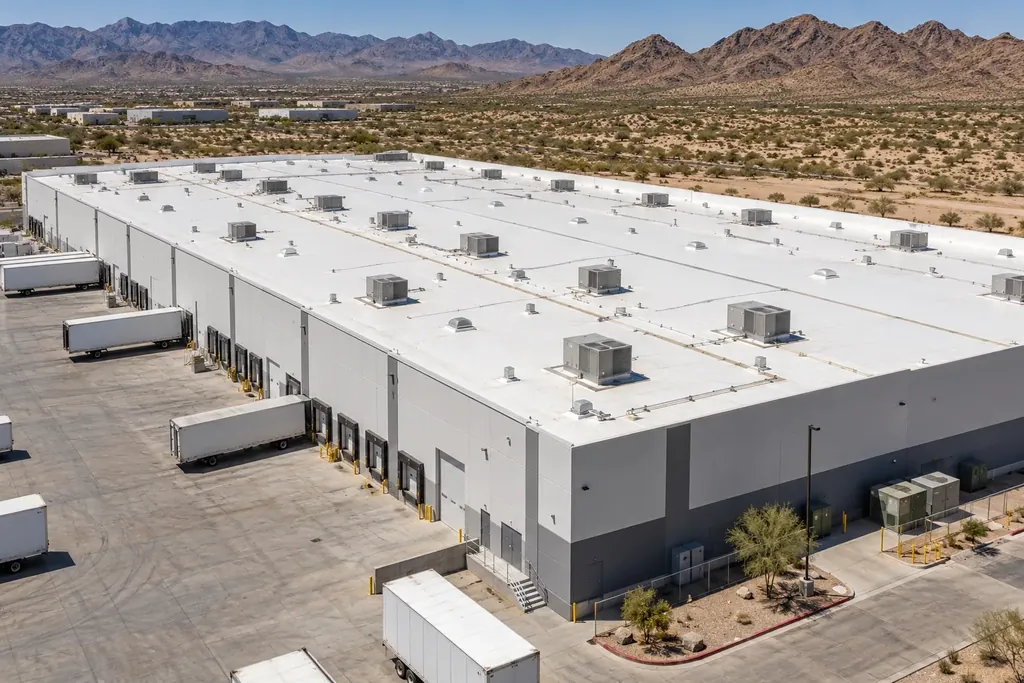
A Yucca roof coating contractor works on roofs with little around them to block the wind. Sand and grit blow across those roofs for hours and slowly scour the coating away. Buildings along the highway corridor here often sit alone with open ground around them.
We measure where the coating has worn thinnest, usually the windward edge and around units, and build extra thickness there. Busy paths get a tougher urethane, and edges get sealed so wind cannot get under them. The thickness readings go into the scope, so you can see where the extra coating goes and why.
- Thickness readings across the roof
- Extra coats along the windward side
- Urethane on technician paths
Yucca Roof Coating Problems On Exposed Roofs
Wind and grit leave a pattern. Each pair shows what it looks like inside and on the roof. Thickness readings show how far each one has gone.
Scoured Windward Edge
- Inside The Building
- Slow leaks along the wall facing the wind.
- On The Roof
- Coating worn thin on the edge that takes the most grit. This shows up first on the side facing the wind.
Worn Paths To Units
- Inside The Building
- Leaks near units after service visits.
- On The Roof
- Grit ground into the coating along technician paths. This shows up first on the side facing the wind.
Lifted Edge Metal
- Inside The Building
- Water at the top of walls after storms.
- On The Roof
- Edge metal loosened by wind, letting water under the roof edge. This shows up first on the side facing the wind.
Sand In Drains
- Inside The Building
- Fresh stains after monsoon rain.
- On The Roof
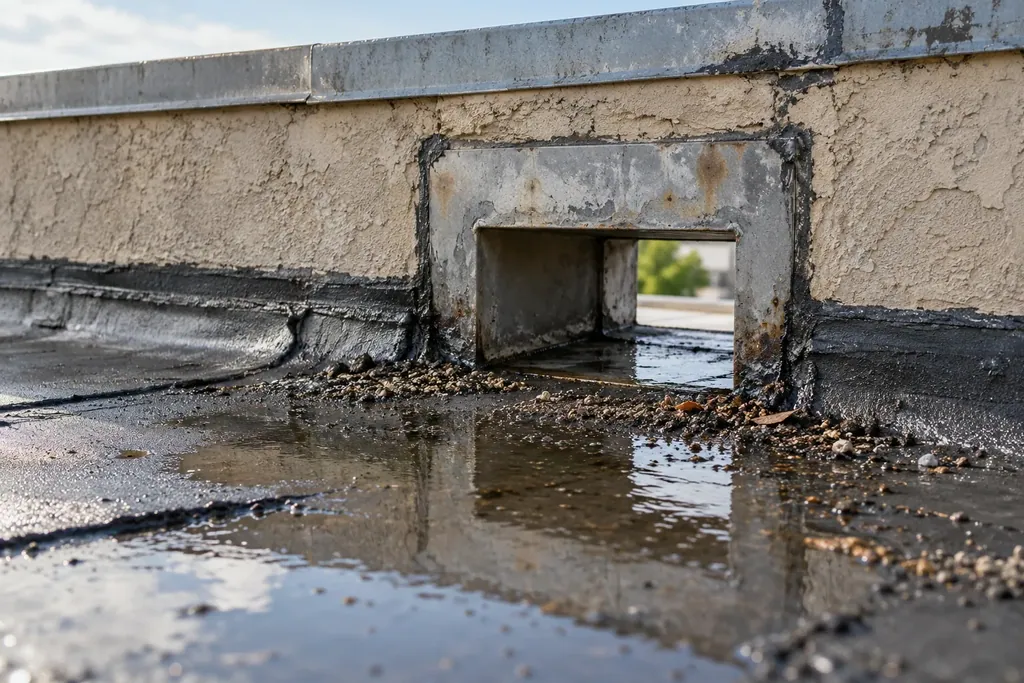
- Drains and scuppers half full of sand. This shows up first on the side facing the wind.
Thin, Chalky Field
- Inside The Building
- Rooms running warmer each summer.
- On The Roof
- UV and grit wearing the field down to the base coat. This shows up first on the side facing the wind.
Exposed Seams
- Inside The Building
- Drips along a straight line.
- On The Roof
- Seams showing through where the coating wore off. This shows up first on the side facing the wind.
Benefits of Coating Your Roof
Putting thickness where the wear happens makes the coating last longer on an exposed roof.
Thickness Where It Wears
Extra coats go on the windward edge and around units, where readings show the coating thins fastest. The rest of the roof gets a normal build.
Tougher Traffic Paths
Urethane along service paths resists the grit that technicians grind in with every visit. Technicians get firm footing on the way to each unit.
Edges Held Down
Refastened and sealed edge metal keeps wind from lifting the roof edge and driving rain under it. Sealed edges also keep sand from collecting under them.
Recoats Before Wear-Through
Twice-a-year checks show when the windward edge needs a fresh coat, long before seams are exposed. That keeps the roof on a steady, predictable schedule.
Commercial Roof Coating Options for Yucca
Exposed roofs usually call for one of these.
Thicker Windward Build
An extra coat on the edges and zones that take the most grit. It goes where readings show the most wear.
Urethane Walkways
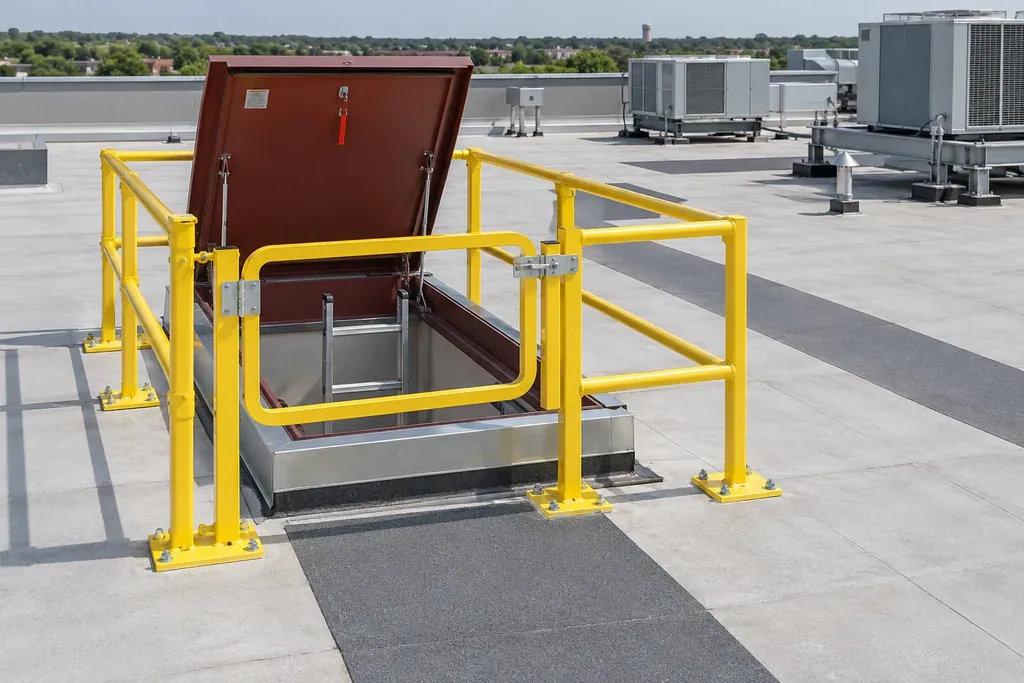
Tough urethane paths from the hatch to each rooftop unit. It resists grit ground in by boots.
Edge Metal Refastening
Loose edge metal refastened and sealed before coating. It keeps wind from peeling up the roof edge.
Full Recoat
A full new coat when the field has worn down evenly. It suits roofs worn evenly across the field.
Coating Wearing Thin On The Windy Side?
Thin spots on exposed edges wear through fast. Gather these details and see a ballpark number.
Get A Free Ballpark EstimateWhat To Have Ready
- Roof size, or the building footprint
- Where leaks or ceiling stains show up inside
- How the crew gets onto the roof
- Any past repair or coating paperwork
How An Exposed Roof Gets Recoated
Thickness readings guide the whole job.
Inspect Your Roof
Coating thickness gets measured across the roof, along with edges, drains, and paths. Readings get marked on a roof sketch.
Refasten The Edges
Loose edge metal is refastened and its seams sealed. Edge seams get sealant and fabric.
Clean Out The Sand
Drains and scuppers are cleared and the roof washed of grit. Sand is bagged and hauled off.
Build Up Thin Zones
Extra coats go on the windward edge and around units. Extra coats cure between passes.
Coat The Field And Paths
The field gets its coat and urethane goes on walkways. Paths run from the hatch to each unit.
Nearby Areas We Also Coat
Yucca sits in our regular coverage with the areas below. Outside them? call us or send us a message.
Golden Valley
Metal ShopsRust graded panel by panel.
New Kingman-Butler
Mixed RoofsStorefronts joined to steel shops.
Valle Vista
Cool RoofsCool-rated coatings and colors.
Dolan Springs
InsulationFoam for hot steel buildings.
Griffith Industrial Park
New SteelEarly coating on newer steel.
Yucca Roof Coating Questions
Question about your own roof?
Call UsWhy does the coating wear faster on one side?
Wind carries sand and grit from one direction most of the time, so the edge facing it takes the most scouring. Thickness readings show the pattern. That pattern decides where extra coats go.
What is urethane used for?
Urethane is a tougher coating that resists foot traffic and grit. It goes along paths technicians walk to rooftop units. It costs more than acrylic, so it goes only where traffic is heavy.
Who handles permits in Yucca?
Yucca is unincorporated, so Mohave County Development Services handles building questions. We confirm the need before scheduling. Most coating scopes get confirmed in one call.
How often should an exposed roof be checked?
Twice a year works well: spring before monsoon season and late fall before freezing weather, plus after high winds. Edge metal and drains get extra attention after wind events.
Can edge metal be fixed without a new roof?
Loose edge metal can be refastened and sealed, and bent pieces replaced, before the roof is coated. Edge work comes before coating so the new layer is not lifted.
What does recoating an exposed roof cost?
Recoats fall within our $2.50 to $4 per square foot ballpark range. Extra windward coats and urethane paths push a roof higher in that range. The inspection turns the range into a written number.
Does a thicker coating cost more?
Extra thickness means more material, so windward zones cost more per square foot than the rest of the roof. Putting thickness only where wear happens keeps the overall price down.
Hire A Yucca Roof Coating Contractor
Tell us where the roof looks worn, and we will measure the thickness.