Silicone Roof Coating
A frequent topcoat for foam that sees water near drains after storms.
Silicone coating
Spray Foam Roofing
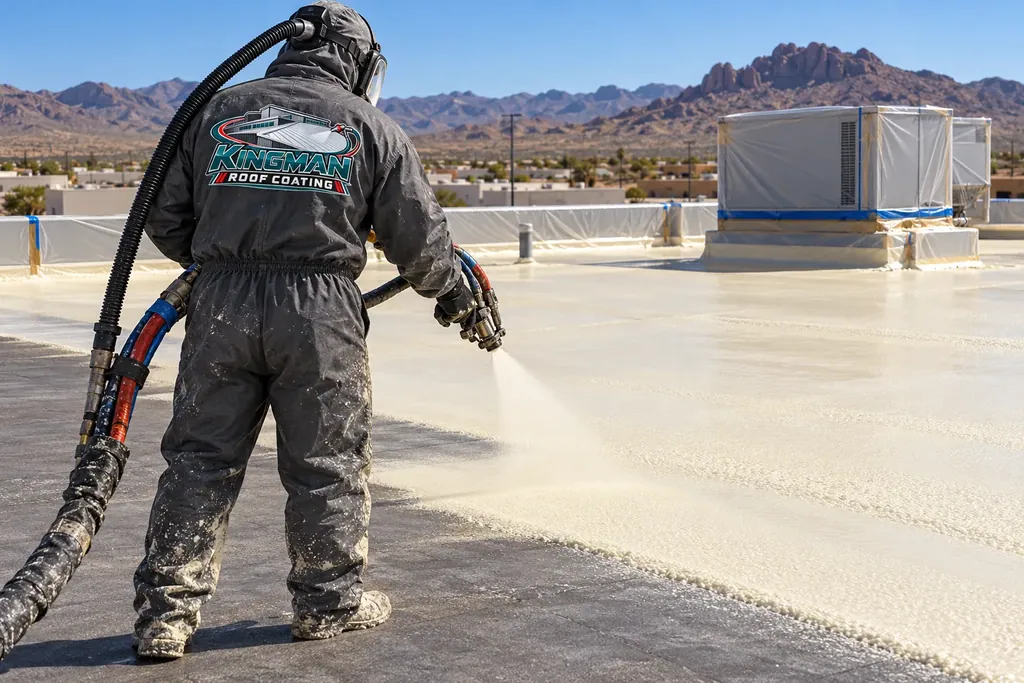
As a Kingman spray foam roofing contractor, we spray insulating foam over dry commercial roofs and seal it with a protective topcoat.
A Kingman spray foam roofing contractor checks dryness and wind before spraying. These conditions sort roofs for foam.
Foam roofs wear in their own ways. Each pair ties an indoor sign to the foam condition behind it.
Foam jobs differ in what the foam covers and which topcoat seals it. The inspection narrows it to one before any foam is ordered.
| Option | Foam Goes Over | Topcoat |
|---|---|---|
| Recover over existing roof | Dry, firm membrane or built-up roof | Silicone or acrylic |
| Foam over metal | Cleaned, fastened steel | Silicone or acrylic |
| Tapered foam | Low areas on a flat roof | Silicone near drains |
| Foam recoat | An existing foam roof | Fresh topcoat after sanding |
| Foam with urethane paths | High-traffic zones | Urethane along walkways |
Foam adds insulation that a coating alone cannot, along with a new surface. Most owners notice it in the first summer.
Foam adds an insulating layer and a new weather surface in one project, which helps buildings that bake under summer sun. Rooms below feel the change in the first summer.
Extra foam in low areas moves water toward drains, ending ponding that wears out coatings. Drains finally get the water they were meant to carry.
Sprayed foam forms one continuous layer, covering old seams, laps, and screw heads beneath it. Old leaks at laps and screws end under the foam.
When the topcoat wears from grit and sun, foam gets sanded and recoated rather than torn off. Each recoat adds years to the same foam layer.
Exposed foam is easier to sand and recoat than to replace. Gather these details and start with a ballpark number.
Get A Free Ballpark EstimateWhat To Have Ready
Foam rises within seconds of spraying. Prep and protection take most of the time. Calm, dry days set the spray schedule.
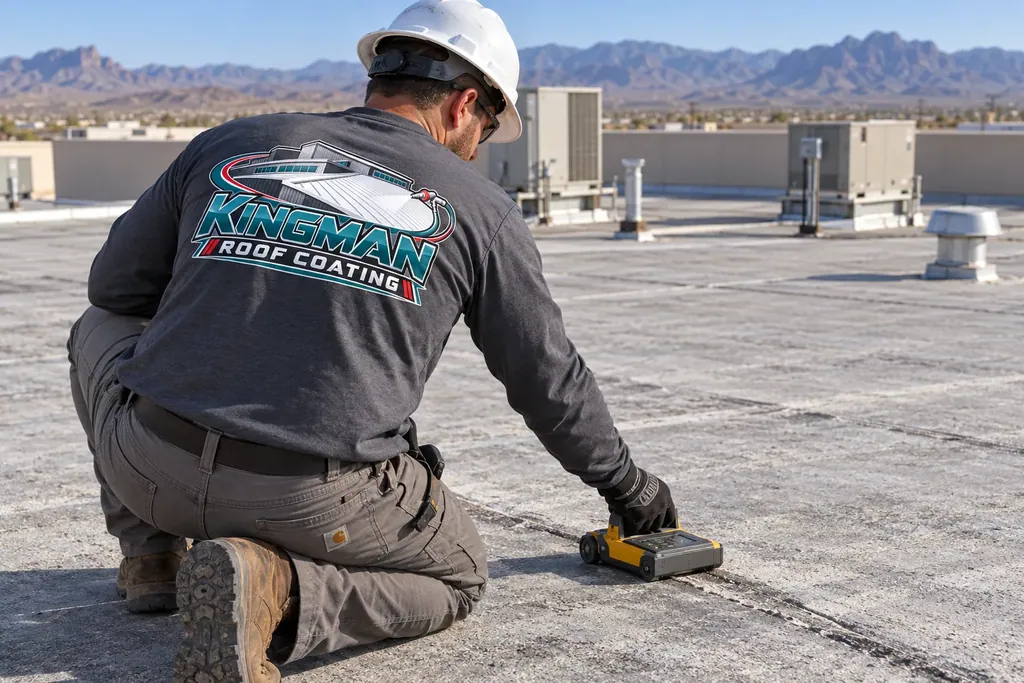

Moisture readings and cores confirm the roof is dry enough for foam to stick. Cores are patched right after they are taken.
Wet insulation, loose gravel, and failed patches come off first. Removed areas are filled flush before spraying.
Units, intakes, and cars are covered, and spraying stops when wind picks up. Wind readings continue through the whole day.
Foam goes on in passes to the planned thickness, thicker where slope is built. Each pass is checked for thickness before the next.
A silicone or acrylic topcoat follows right after spraying, before UV reaches the foam. The topcoat goes on at the thickness the product sheet lists.
Every foam roof ends with a coating, and these pages compare the options.
A frequent topcoat for foam that sees water near drains after storms.
Silicone coatingA lower-cost topcoat for foam roofs with good slope and fast drainage.
Acrylic coatingSteel buildings that do not need insulation can take a coating alone.
Metal coating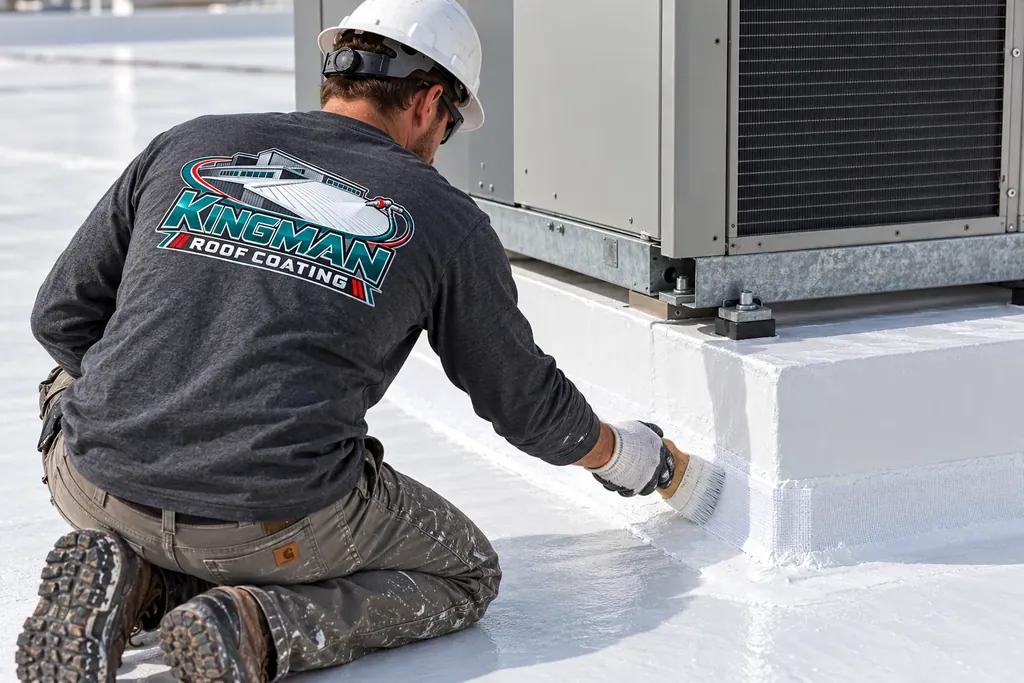
Question about your own roof?
Call UsWind is the main limit on foam days here. Overspray drifts in steady wind, so crews watch speed and direction all day, screen roof edges, and stop when conditions turn. On gusty days, spraying shifts to the side of the building away from parked cars and neighbors.
A dry, well-attached roof can take foam. Moisture readings and cores confirm that, and any wet or loose layers come off first. Core samples show how deep any moisture goes before foam is planned.
Thickness follows the insulation and slope the roof needs, and it varies where foam is tapered. The plan is written into the scope. Tapered areas can be several inches thicker than the rest to move water to drains.
With foam on top, the steel stays warmer, which cuts down on condensation forming under the panels on cold mornings. It also quiets rain and hail on the panels.
Foam costs more than a coating alone because it adds insulation under the topcoat. Thickness, tapering, and prep set the price. The added insulation and slope often make up for that difference on hot buildings.
When the topcoat wears thin from sun and grit. Spring and fall roof checks catch thin spots before bare foam shows. A fresh topcoat over sanded foam brings the roof back without a tear-off.
Curbs get extra foam built up around them so water runs away from the unit. Units and their intakes are masked while spraying, and the topcoat is brushed into tight spots by hand.
Share the roof size and surface, and we will plan the foam thickness.
Leave a name and number, or call (928) 436-4831 now.