Acrylic Roof Coating
Flat roofs that drain within a day can use acrylic at a lower cost per square foot.
Acrylic coating
Silicone Roof Coating
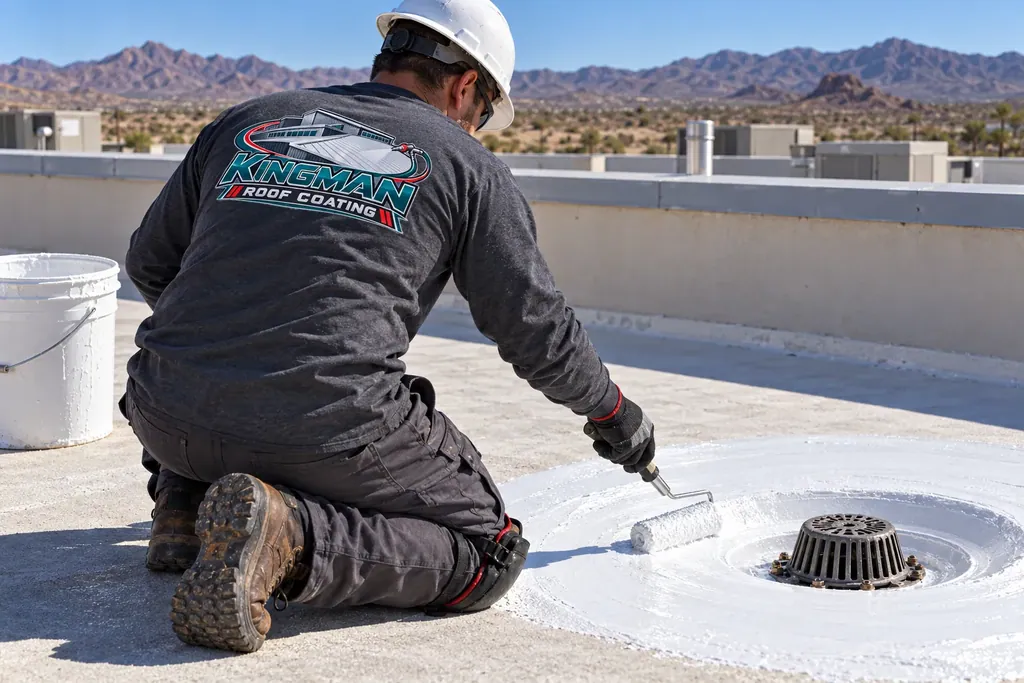
As a Kingman silicone roof coating contractor, we coat flat roofs that hold water, once drains, seams, and wet areas are repaired.
A Kingman silicone roof coating contractor looks at drainage and moisture before anything else. Here is how roofs sort out.
Silicone goes over flat roofs with known weak spots. These pairs show where water starts and where it shows up.
Silicone comes in more than one build. The surface and the amount of standing water decide which.
| Option | Goes Over | Use When |
|---|---|---|
| High-solids single coat | Clean TPO, PVC, or foam | The roof is tight and dry |
| Two coats with primer | Mod bit or old acrylic | Bleed or adhesion needs care |
| Silicone with fabric | Any listed membrane | Seams and flashings move |
| Silicone over new foam | Fresh spray foam | Low spots need tapering |
| Silicone recoat | An earlier silicone coat | The old silicone is worn but attached |
Silicone pays off most on flat roofs that will keep catching storm water.
Silicone keeps working in the low spots near drains where acrylic softens and wears away after repeated storms.
Kingman winter nights drop below freezing. Silicone stays flexible in the cold, so it moves with the roof instead of cracking.
High-solids products can reach full thickness in one or two passes, which shortens the time crews spend on the roof.
A worn silicone roof is cleaned and recoated with more silicone, keeping the same product family on the building.
Slow drains are often a quick fix that comes before any coating. Get these details together and start with a ballpark number.
Get A Free Ballpark EstimateWhat To Have Ready
Silicone needs a clean, dry roof. Most of the work comes before the pail opens.
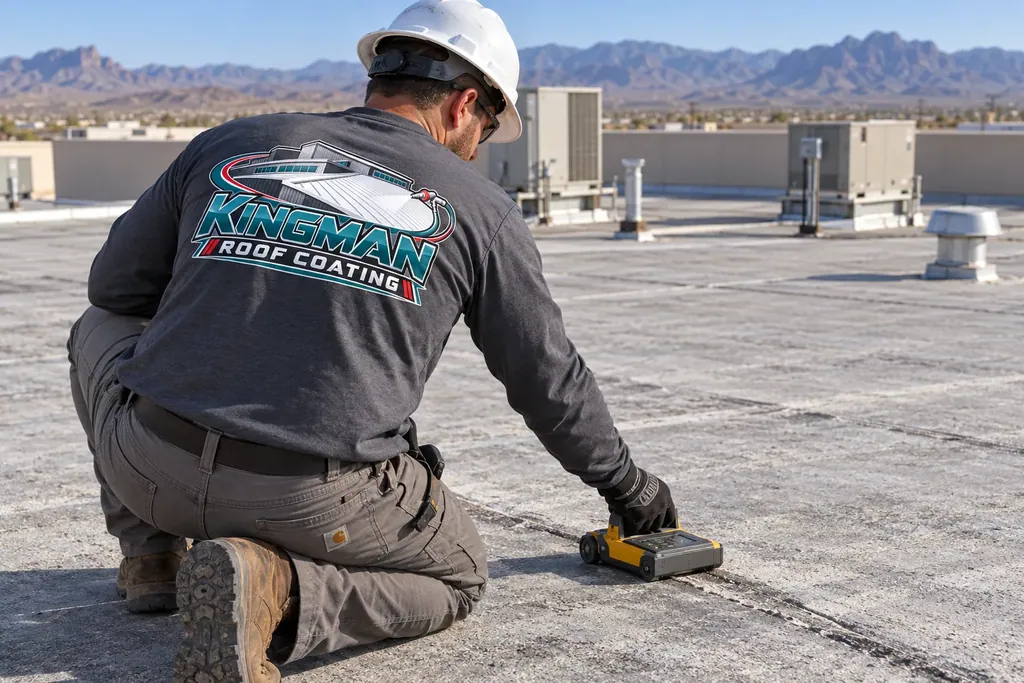
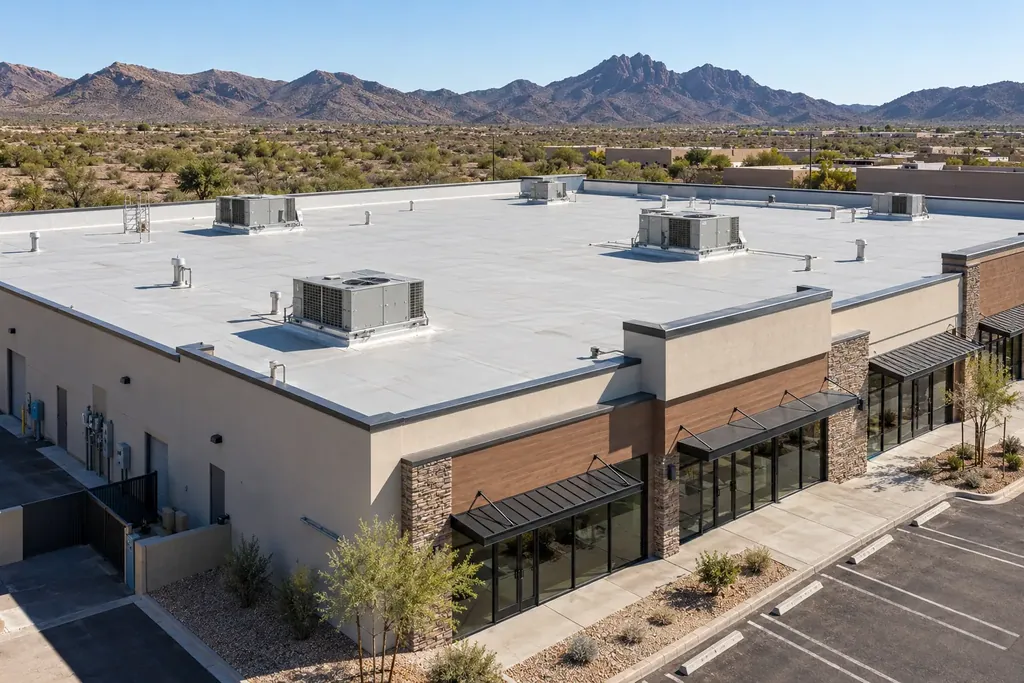
Moisture readings, cores where needed, and a drain check confirm the roof can take silicone. Wet areas get marked on a roof plan before anything is cut.
Soaked insulation is removed and replaced, and blisters are opened and patched. New insulation and membrane match the thickness around them.
The roof is cleaned of grit and chalk, dried, and primed where needed. The roof must be fully dry before primer goes down.
Fabric or tape goes on seams, curbs, and drains with a detail coat. Detail coats cure before the field coat goes over them.
Silicone goes on at the listed thickness, checked with a wet film gauge. Readings are taken across the whole roof, edges and middle alike.
Some flat roofs fit a different system after drainage is checked.
Flat roofs that drain within a day can use acrylic at a lower cost per square foot.
Acrylic coatingDeep low spots can be built up with tapered foam before silicone goes on top.
Spray foam roofingSteel sections on the same property need screw and rust work under their own coating.
Metal coating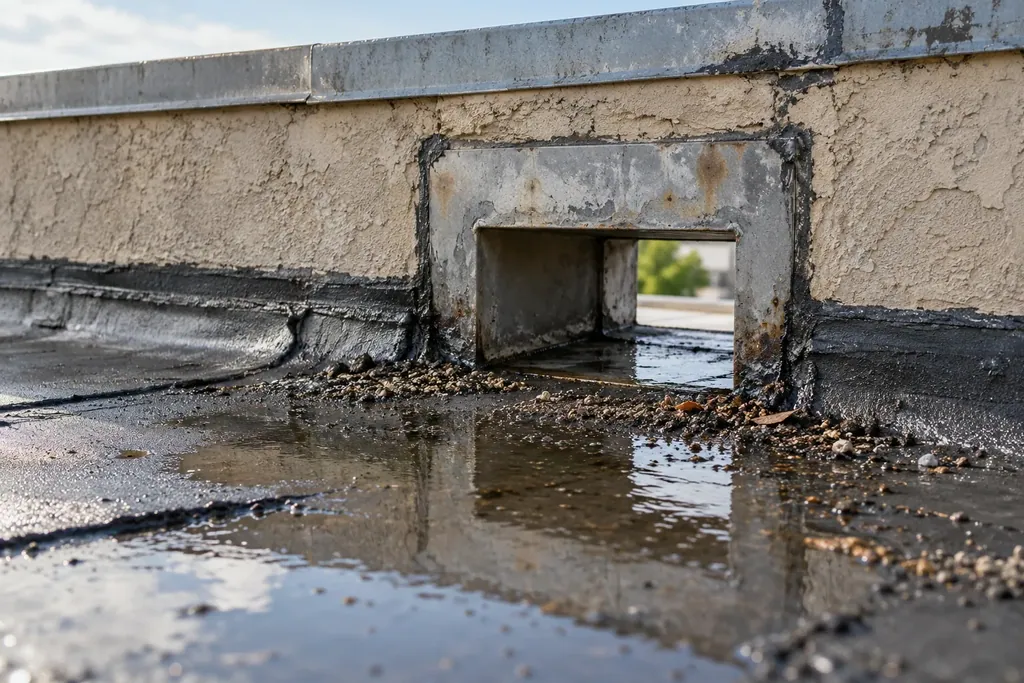
Question about your own roof?
Call UsStanding water is where silicone outlasts acrylic. Drains still get cleared first, since a coating cannot change the slope and water that never leaves the roof collects dirt and weight. If a drain sits higher than the roof around it, the drain ring gets reset before coating.
Silicone tolerates cooler weather better than water-based acrylic. Each product still lists a minimum air and surface temperature, so winter jobs are set during warm stretches. Overnight lows matter as much as daytime highs, so the forecast gets checked for the whole cure period.
TPO can take silicone after a thorough cleaning and the primer the product calls for. Welds get checked for splits first, and the coating must be approved for TPO. Any loose or split welds get rewelded or covered with tape and fabric first.
Plan on silicone for future recoats. Acrylic and most other coatings bond poorly to silicone, so recoats use silicone after a good cleaning. That recoat path is worth weighing when you compare silicone with acrylic up front.
Over time, dust sticks to silicone more than acrylic and dulls the white finish. A rinse during spring and fall roof checks brings back much of the shine. Rinsing with plain water is enough, with no harsh cleaners needed.
Wet or dusty silicone can be slick. Walk pads or a granule broadcast along service paths give technicians footing and protect the coating at busy units. Paths are laid out from the hatch to each unit before the field coat goes on.
Silicone cures with moisture in the air, and it skins over within hours on most days. Kingman air is dry, so full cure can take a little longer than in humid places, and rain right after application is the main thing crews watch for.
Tell us where water collects on the roof and how big the roof is.
Leave a name and number, or call (928) 436-4831 now.