Silicone Roof Coating
Roofs with ponding near drains do better with silicone, which tolerates standing water.
Silicone coating
Acrylic Roof Coating
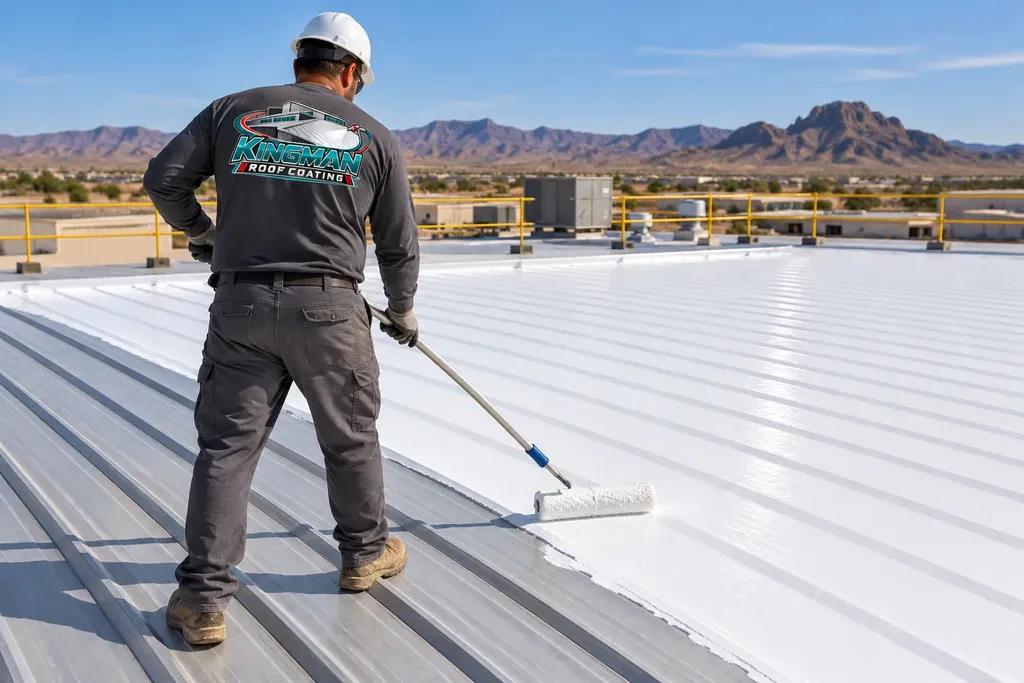
As a Kingman acrylic roof coating contractor, we coat well-drained flat and metal roofs with economical, water-based white acrylic.
A Kingman acrylic roof coating contractor checks drainage and the calendar. Acrylic needs a roof that dries out and weather mild enough to cure.
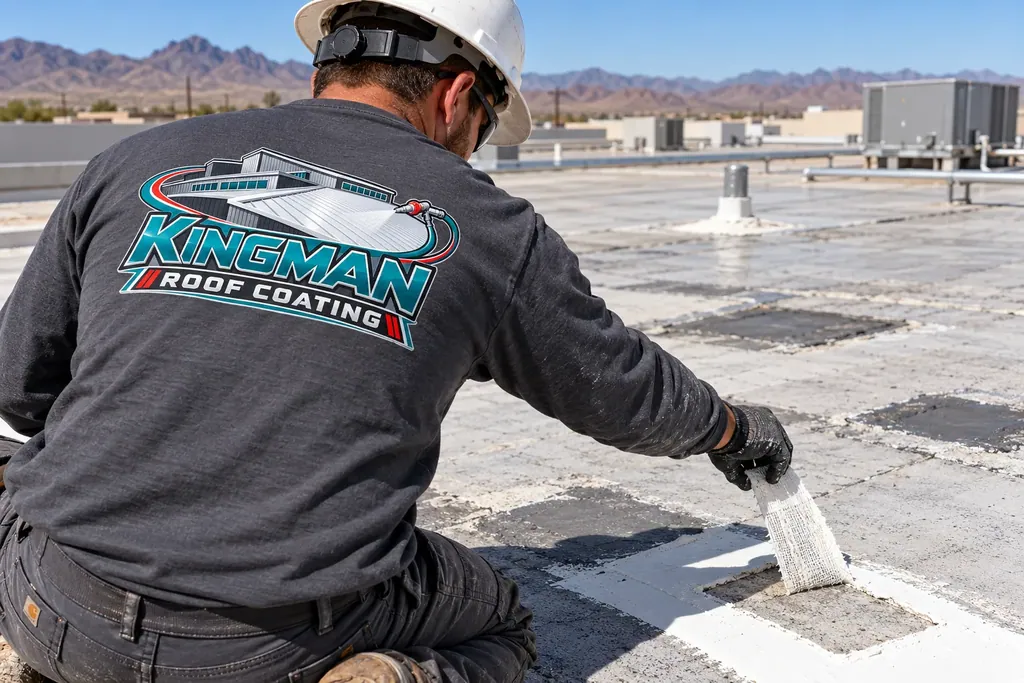
Acrylic needs a firm base. These pairs show the problems we fix before the first coat.
Acrylic systems differ mostly in thickness and reinforcement.
| Option | Build | Use When |
|---|---|---|
| Two-coat acrylic | Base coat and top coat | The roof drains well and the surface is firm |
| Acrylic with fabric | Polyester at seams and walls | Seams and flashings move or crack |
| Primer plus acrylic | Bleed blocker or rust primer first | Asphalt cap sheets or rusty metal |
| Acrylic recoat | Wash, repairs, one fresh coat | An earlier acrylic coat is worn |
| Acrylic with urethane paths | Acrylic field, urethane walkways | Technicians cross the roof often |
On a roof that drains, acrylic gives a bright surface at a lower cost.
Acrylic is the economical choice on roofs that shed water, which matters on large shop and warehouse roofs. That savings grows with every thousand square feet.
Future recoats come down to washing, small repairs, and another rolled coat of acrylic over the old one. No special cleaners or solvents are needed between coats.
Water-based acrylic cleans up with water and keeps odor low around rooftop air intakes and occupied rooms. Crews can work near occupied rooms without sealing them off.
A fresh white coat reflects summer sun off the roof and makes later damage easy to spot on roof checks. Damage shows up as dark spots against the white.
A spring recoat beats the summer heat and the monsoon. Gather these details and see a ballpark number.
Get A Free Ballpark EstimateWhat To Have Ready
Acrylic cures as its water evaporates, so weather sets the dates.
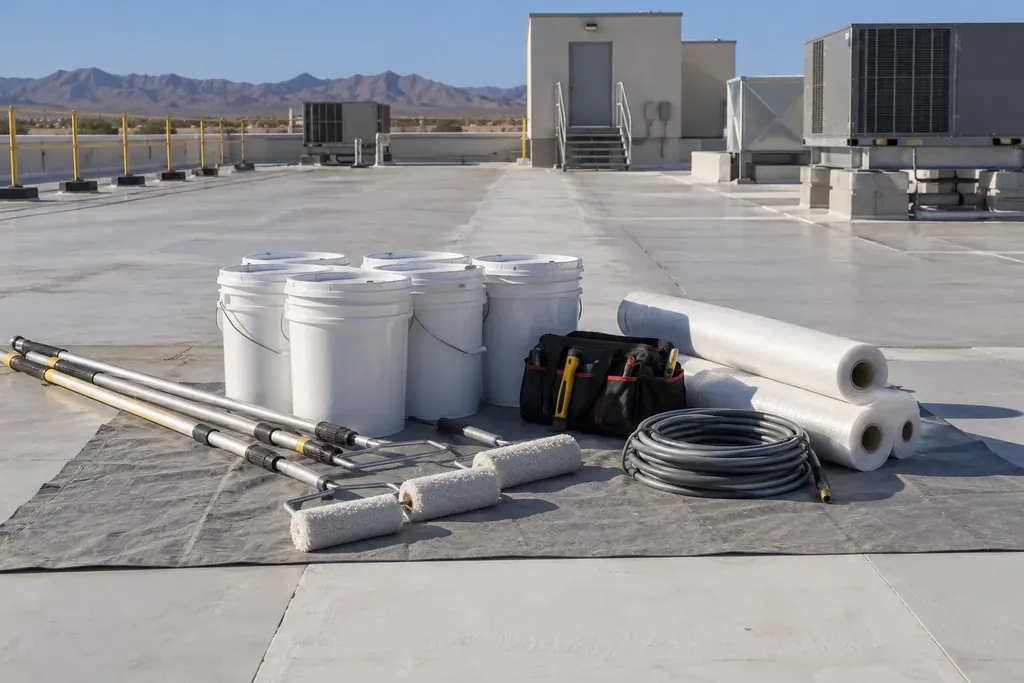
Drainage, seams, flashing, and old coatings get checked, plus how long water lingers. Water that lingers past two days rules acrylic out for that area.
Cracked flashing gets rebuilt with fabric and open seams get sealed. Fabric gets embedded in the first layer of coating.
Pressure washing removes chalk, dust, and loose granules. Wash water gets time to dry before priming.
Bleed blocker on asphalt and rust primer on metal go only where required. A small test area shows whether bleed blocker is working.
Base and top coats go on in crossing passes with cure time between. The second coat runs across the first for even coverage.
If acrylic is a close call, one of these may suit the roof better.
Roofs with ponding near drains do better with silicone, which tolerates standing water.
Silicone coatingSteel roofs need screw and rust work that the metal page lays out step by step.
Metal coatingShingle mansards on the same building go through a stricter condition check.
Shingle coating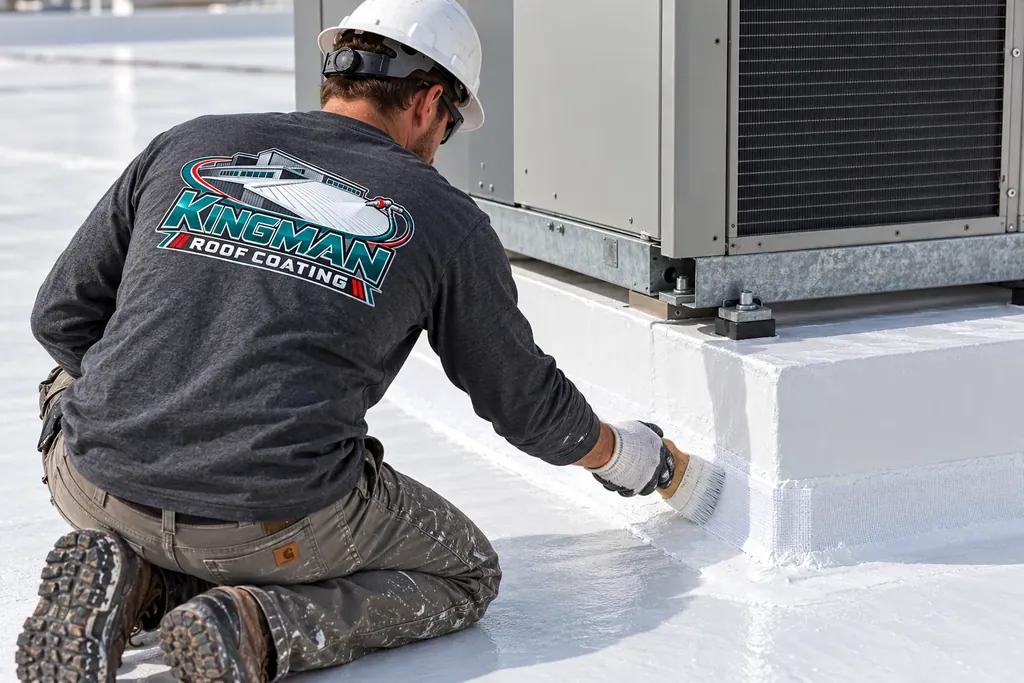
Question about your own roof?
Call UsOnly during mild, dry stretches. Acrylic needs warm enough air and time to cure before nightfall, and a frost before it cures can ruin the film. Spring and fall are the most reliable seasons. Silicone or a low-temperature product is the better pick when a job has to happen in winter.
On metal that drains well, acrylic is a common and economical top layer. Rust primer and lap reinforcement come first. Fabric at the laps keeps them from cracking through the coating as the steel moves.
Roof surfaces run far hotter than the air in summer. Coats that dry too fast can blister, so summer work starts early and stays within the product limits. Morning starts also keep crews off the roof in the worst afternoon heat.
Acrylic jobs often sit in the lower part of our $2.50 to $4 per square foot ballpark range. Fabric, bleed primer, and flashing repairs push a job higher. The inspection gives you a written number for your roof.
Under heavy traffic, acrylic wears faster. Busy paths around units get urethane or walk pads while the rest of the roof keeps acrylic. That keeps the economical acrylic on most of the roof while protecting the paths that take the wear.
The base coat must be dry and firm before the top coat goes on. Warm, dry days allow that within a day, while cooler days stretch it out. Rain or dew between coats pushes the second coat back another day.
Acrylic bonds poorly to silicone, so a roof that already has silicone stays with silicone for its recoats. An adhesion test tells us what is on the roof when no records exist.
Let us know how fast the roof drains and when it was last coated.
Leave a name and number, or call (928) 436-4831 now.