Spray Foam Roofing
Foam over the panels insulates a hot shop and covers every screw head under one layer.
Spray foam roofing
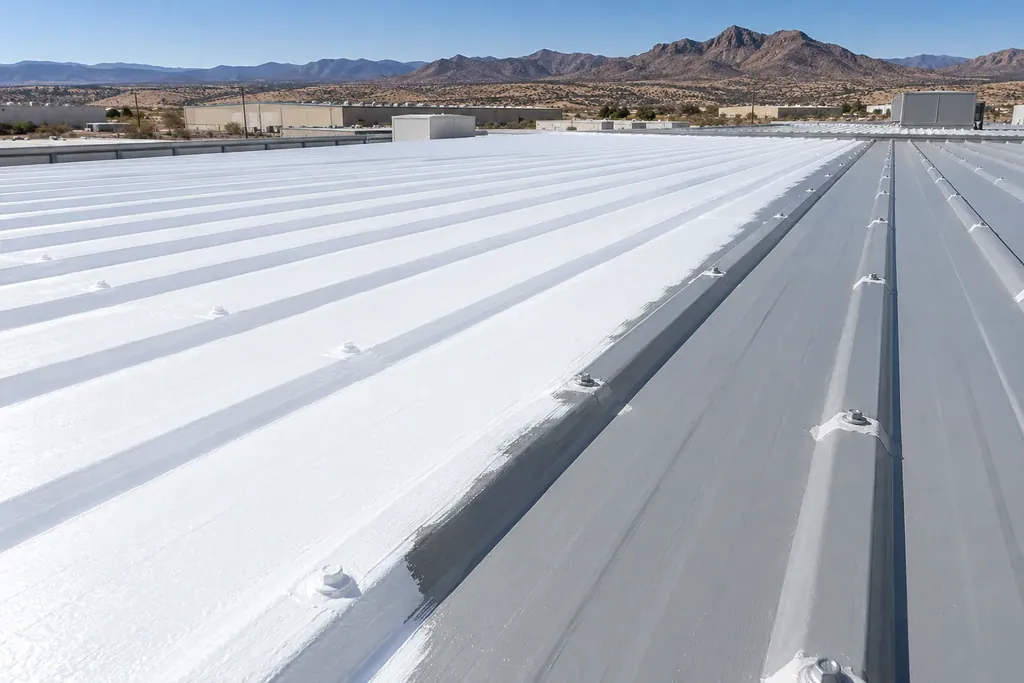
Metal Roof Coating
As a Kingman metal roof coating contractor, we replace loose screws, treat rust, reinforce laps, and coat steel commercial roofs.
A Kingman metal roof coating contractor reads the steel before choosing a product. These conditions sort the roof into one of two columns.
Steel roofs around Kingman show the same failures again and again. Each pair links an indoor sign to its source on the roof.
Metal roofs have more than one coating route. Panel condition and drainage pick the right one.
| Option | What Goes On | Use When |
|---|---|---|
| Acrylic metal system | Rust primer, lap fabric, two acrylic coats | Panels drain well and rust is light |
| Silicone metal system | Primer, sealed laps, silicone top layer | Low-pitch sections hold some water |
| Urethane at traffic paths | Tougher coat along walkways and units | Technicians cross the roof often |
| Foam over metal | Spray foam layer plus a topcoat | The building runs hot inside |
| Repair and spot coat | Screws, laps, coated repair areas | Budget covers only the worst runs now |
Coating steel that is still firm keeps the building working for years longer.
Re-sheeting a steel roof means stripping panels and trim. Coating keeps the existing steel in service once its screws and laps are fixed.
Primer on bare spots and a full coat over the panels cut off the air and water that keep rust growing at eaves and laps.
A white coat reflects sun that faded panels would otherwise radiate down into shops, bays, and storage areas.
After new screws go in, the coating covers each head and washer, so UV stops cracking them.
Rust at the eaves spreads up the panels over time. Gather these details and get a ballpark number for coating the roof.
Get A Free Ballpark EstimateWhat To Have Ready
Metal takes more prep than most roofs. This order keeps the coat attached to the steel.
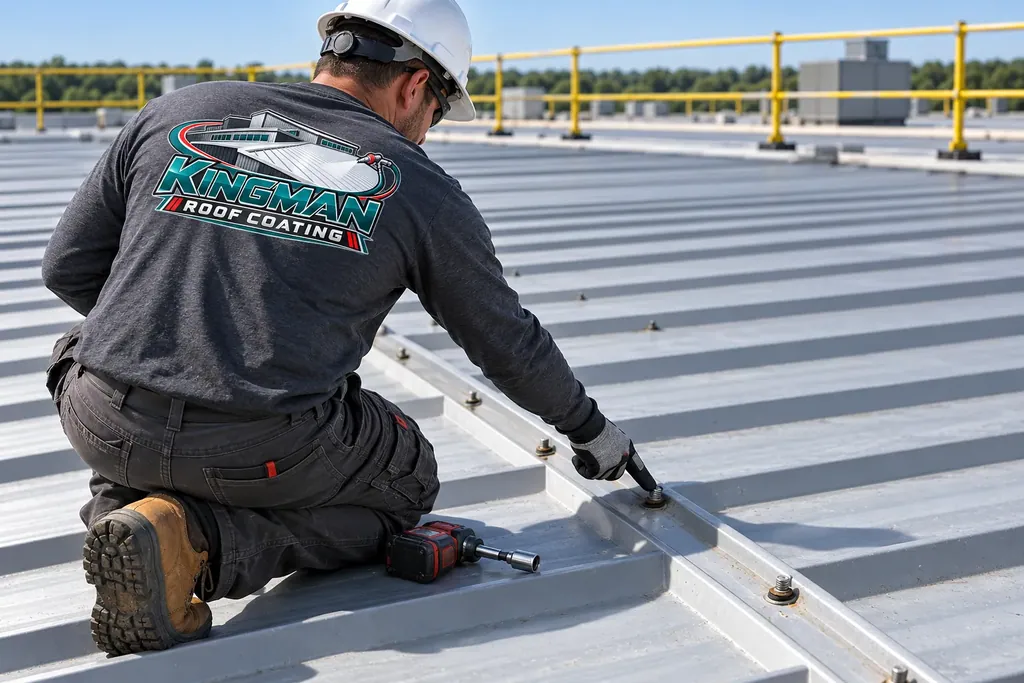
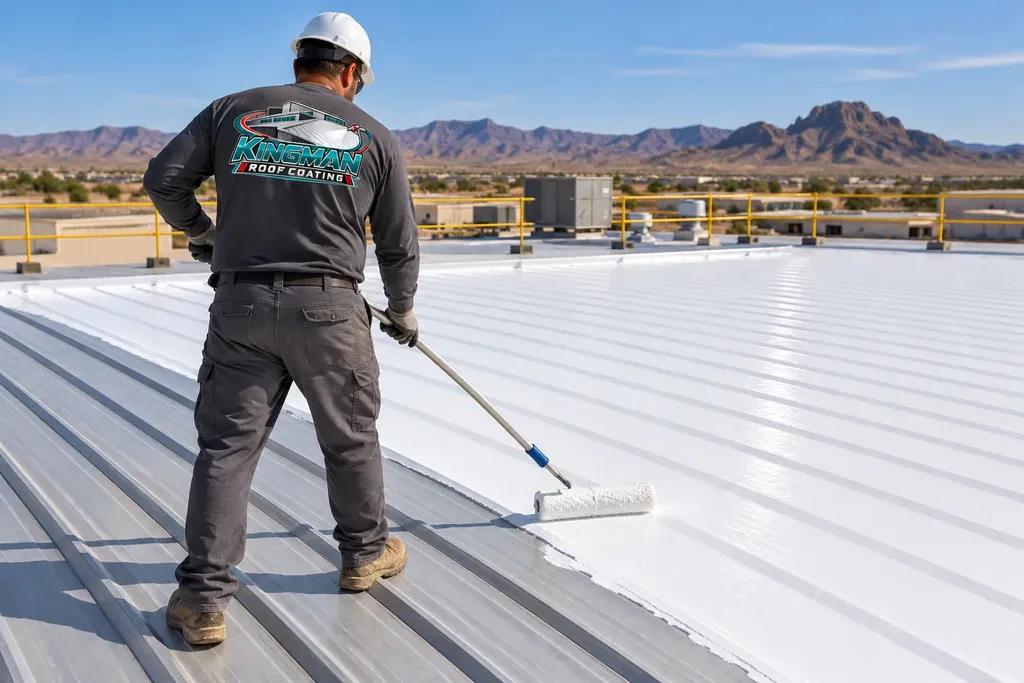
Every screw row, lap, eave, curb, and skylight gets walked and marked. Rusted runs and holed panels get marked on a roof sketch.
Loose and stripped screws come out and oversized screws with new washers go in. Screws are torqued so washers seal without crushing.
Loose rust is brushed off, panels are washed, and rust primer covers bare steel. Primer dries fully before any sealant touches it.
Laps and flashings get sealant plus fabric or seam tape. Fabric gets pressed into wet base coat so it bonds flat.
Base and top coats go on across the ribs in a good weather window. Thickness is spot-checked on the ribs and in the flats.
Steel buildings often carry other roof sections or needs.
Foam over the panels insulates a hot shop and covers every screw head under one layer.
Spray foam roofingFlat office additions on steel buildings drain slowly and usually suit silicone.
Silicone coatingAcrylic is the economical top layer on well-drained metal with light rust.
Acrylic coating
Question about your own roof?
Call UsOur ballpark range for coating is $2.50 to $4 per square foot. Steel roofs land higher in that range when many screws need replacing, laps need fabric, or rusted runs need extra primer. Screw counts and lap lengths from the inspection show exactly where your roof sits.
Surface rust can. It gets brushed, washed, and primed so the coating sticks to firm steel. Panels with holes are swapped for matching panels before coating starts. Holed panels are matched to the existing rib profile so the coating runs across them evenly.
Those drips are usually condensation forming on cold steel. Coating stops rain from outside. Spray foam over the panels keeps the steel warmer and helps more with condensation. Opening ridge vents or adding ventilation can help too, and we will point that out if we see it.
On metal that drains well, acrylic is the common, economical pick. Sections that hold water take silicone, and busy walkways around units get urethane for wear. A short walk of the roof with you shows which areas get which product.
Life depends on the product and how thick it goes on. Coatings wear down from UV and wind-blown grit, so they get cleaned and recoated before wearing through. Spring and fall roof checks show when the top layer is getting thin.
Standing seam uses hidden clips, so there are few exposed screws. Seams, end laps, and penetrations still get cleaned and sealed, and lifted seams get re-crimped. Penetrations through standing seam get new boots or flashing before coating.
Curbs on steel roofs often leak where the panel ribs meet the curb flashing. Those joints get resealed and reinforced with fabric first, and units are masked or rolled around during coating so nothing lands on the equipment.
Send the panel type and roof size, or call and tell us where the rust is.
Leave a name and number, or call (928) 436-4831 now.